The One-Page Financial Plan Built for Freelancers and Content Creators
Most financial advice was built for people with one employer and one paycheck — not for freelancers and content creators juggling variable income, multiple revenue streams, and quarterly taxes. The one-page financial plan fixes that by breaking your entire financial picture down into five sections: cash flow and net worth, taxes, investments, risk analysis, and a 12-month action plan. It takes 1 to 2 hours the first time through and about 45 minutes every year after that. Come back to it once a


This is the one-page financial plan. It consists of five sections, all of which are completable in 1 to 2 hours, and is built to give you a clear picture of where your money stands and what to do about it.
Why One Page?
Because complexity is the enemy of action.
Most financial plans consist of 30-40 pages of random graphs and charts that no one cares about. This one only takes a single page, front and back. You can update it once a year in just 45-60 minutes. And it covers most things that actually matter.
The 5 Sections of the One-Page Financial Plan
Section 1: Cash Flow and Net Worth
Section 2: The Tax Sheet
Section 3: The Investment Sheet
Section 4: The Risk Analysis
Section 5: The Next 12 Months Action Plan
Let's go through each section now.
Section 1: Cash Flow and Net Worth
This is where most freelancers have no idea where they actually stand. And until you know the real number, everything else is a guess.
The Cash Flow Block
You need 4 numbers:
Total inflows — this is everything coming in: client payments, brand deals, affiliate income, interest, dividends, etc.
Total outflows — this is everything going out: rent, software subscriptions, food, equipment, coffee, etc.
Total savings — money already going somewhere intentional: a Roth IRA, a savings account, a tax reserve
Monthly surplus — inflows minus outflows (and money already being saved).
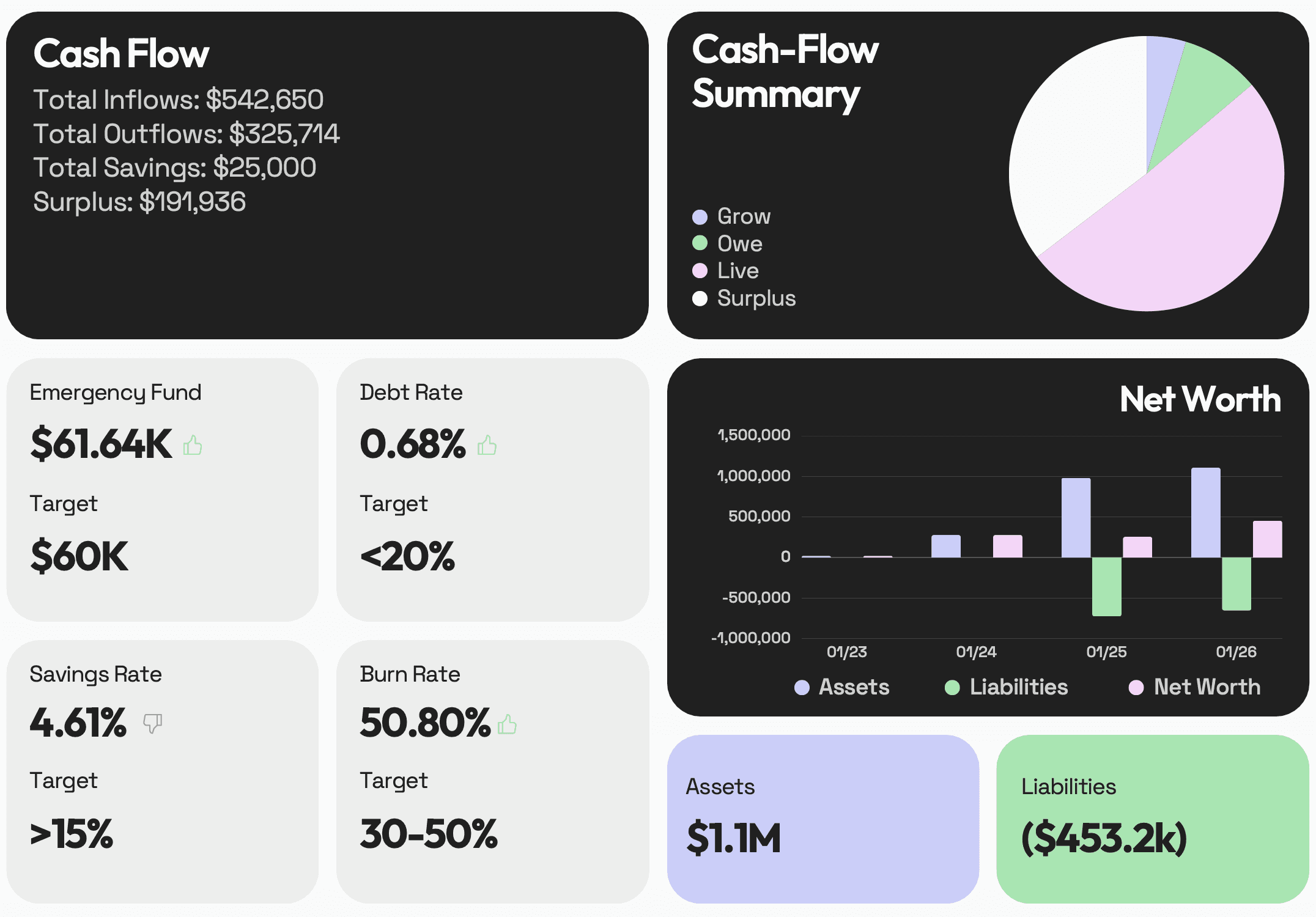
Your monthly surplus matters the most because it tells you exactly how much you have left to work with at the end of every month. For a content creator, this number swings. That's normal. The goal is to know what it looks like on average — not just in your best months.
The 4 Financial Health Indicators
These four metrics give you an honest read on where your finances actually are right now.
Metric: Emergency Fund
How to Calculate It: Non-discretionary monthly expenses x 3–6
Target: 3–6 months minimum
Metric: Debt Rate
How to Calculate It: Total monthly debt payments ÷ total monthly income
Target: Under 36%, ideally under 20%
Metric: Savings Rate
How to Calculate It: Total monthly savings ÷ total monthly income
Target: Above 25%, 15%+ is solid
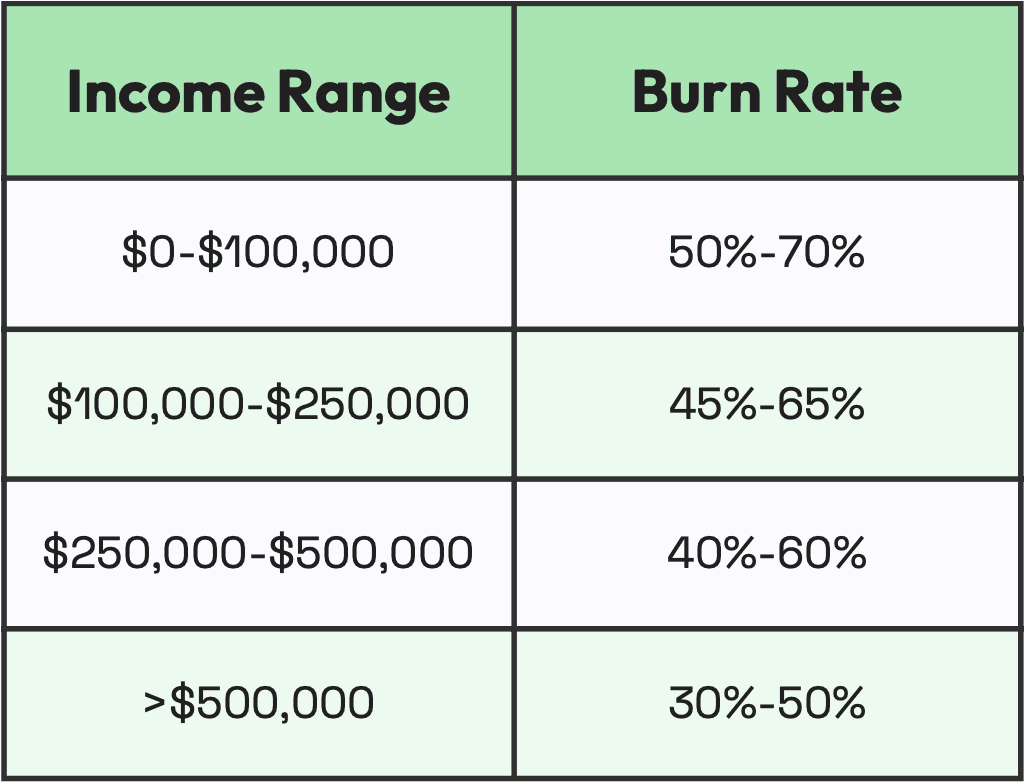
Metric: Burn Rate
How to Calculate It: Total monthly spend ÷ total monthly income
Target: Depends on income range — see chart below
A quick note on the emergency fund for freelancers specifically: the standard 3-month rule wasn't designed for variable income. If your revenue is unpredictable month to month — and for most content creators it is — lean toward 6 months. And consider keeping a separate buffer fund on top of this to cover slow months without touching your emergency savings. That's a separate account, separate purpose.
Net Worth
Assets minus liabilities. What you own minus what you owe.
Track this once a year — late January or early February works well once your year-end statements are out. Watching this number grow over time is one of the most motivating things you can do for your financial life.
Section 2: The Tax Sheet
This is the section that most freelancers and content creators skip. It's also the one that causes the most financial pain when ignored.
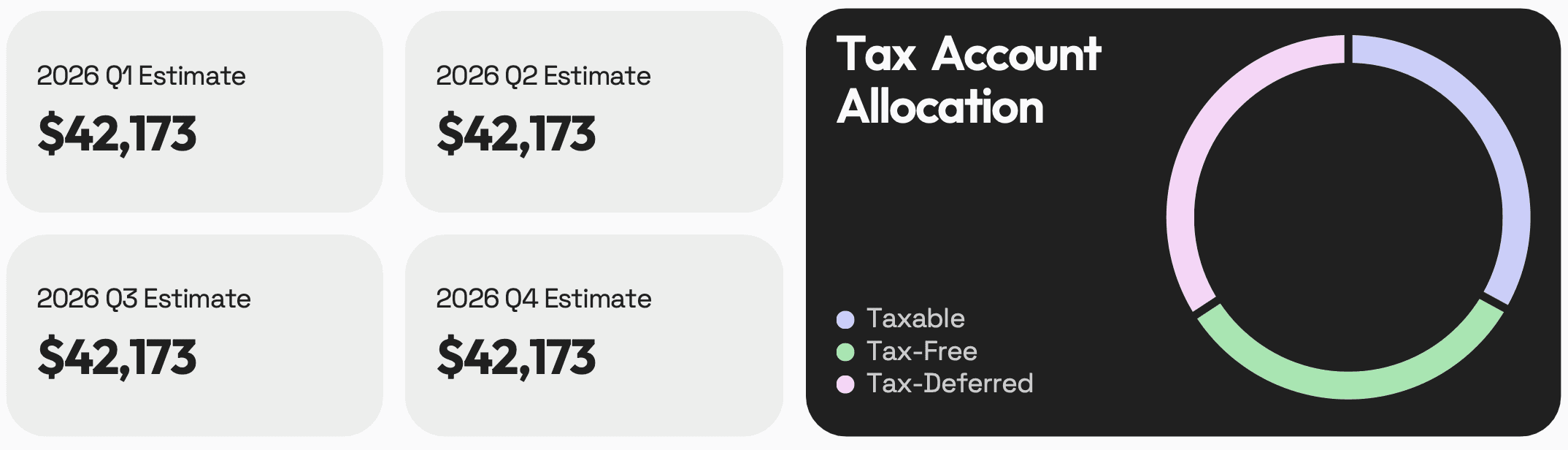
Current Year Tax Estimate
If you're a W-2 employee somewhere, your employer handles most of this. But if you're self-employed, you need to know your estimated tax bill before the IRS sends you a surprise.
A rough rule of thumb: set aside 20 to 30% of your self-employment income for taxes. But rough is the keyword there. The actual number depends on your deductions, your state, your filing status, and whether you've made any retirement contributions. A CPA who works with self-employed creators can get you to a real number — and the difference between a rough estimate and a real one is often significant.
Tax Diversification
This one doesn't get talked about enough.
The goal is to have money spread across all three types of accounts.
Taxable accounts — regular savings and brokerage accounts. You pay taxes on gains when you sell.
Tax-free accounts — Roth IRA, HSA. You contribute after-tax dollars and pay nothing on the growth.
Tax-deferred accounts — traditional 401 (k), traditional IRA. You get the tax break now and pay later in retirement.
For freelancers and content creators planning to retire early or wanting flexibility in retirement, tax diversification isn't just nice to have. It's one of the most powerful tools you've got.
Section 3: The Investment Sheet
Two things. That's all this section needs.
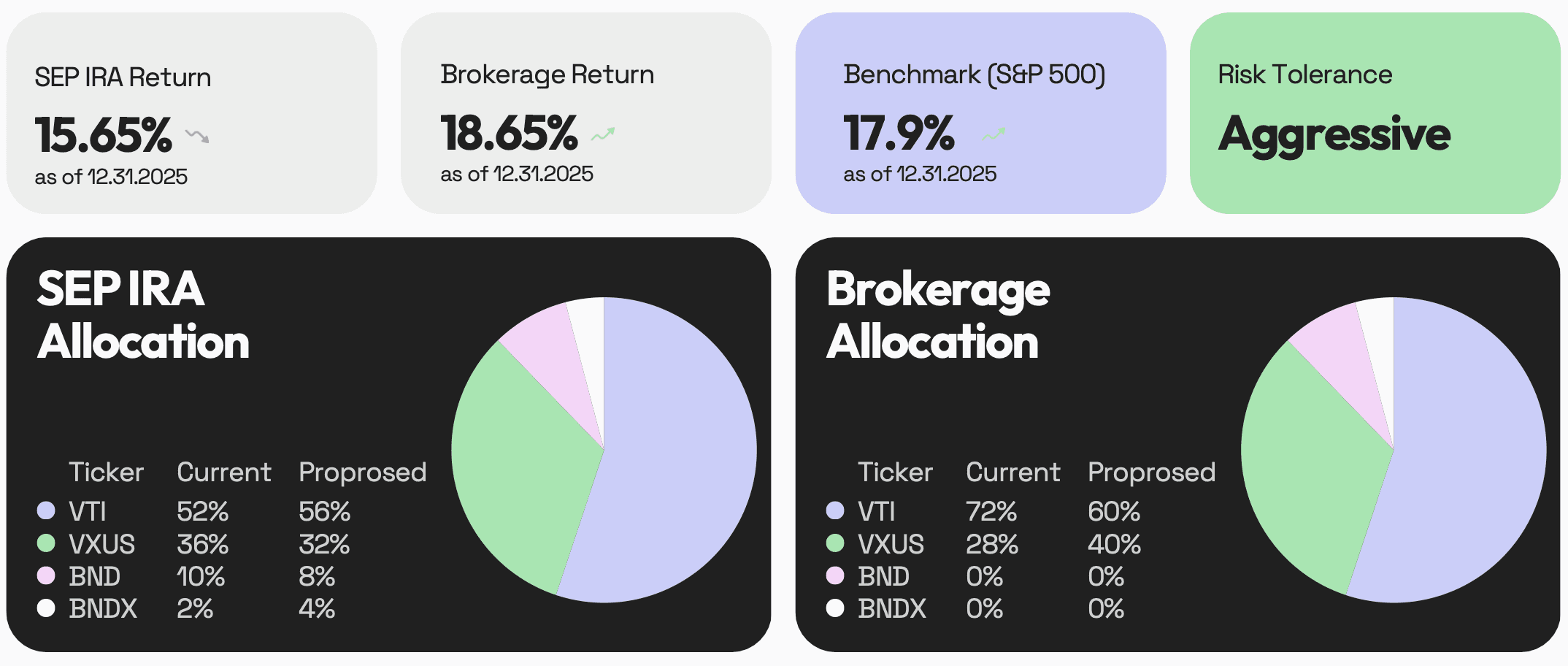
Your Returns vs. Your Benchmark
How did your investments perform this year compared to whatever benchmark you're tracking against? If you're happy with the gap, move on. If you're not — that's a bigger conversation about your overall investment strategy.
Current Allocation vs. Target Allocation
Over time, markets move, and your portfolio drifts. A stock that was supposed to be 60% of your portfolio might now be 70% because it ran up. This section is where you catch that and decide whether to rebalance.
One thing worth knowing: in most cases, rebalancing inside a retirement account like a Roth IRA or 401k has no direct tax consequences. Rebalancing inside a taxable brokerage account is different — selling anything at a gain triggers capital gains tax. Be careful there.
Section 4: The Risk Analysis
The Life Insurance Calculator
This is simpler than it sounds. The calculator answers one question: Do you actually need life insurance this year, and if so, how much?
The formula: total debt, minus total savings, plus income replacement (for whoever depends on your income), plus final expenses. That gives you a number to compare against whatever coverage you currently have.
The Beneficiary Check
This takes five minutes, and most people never do it.
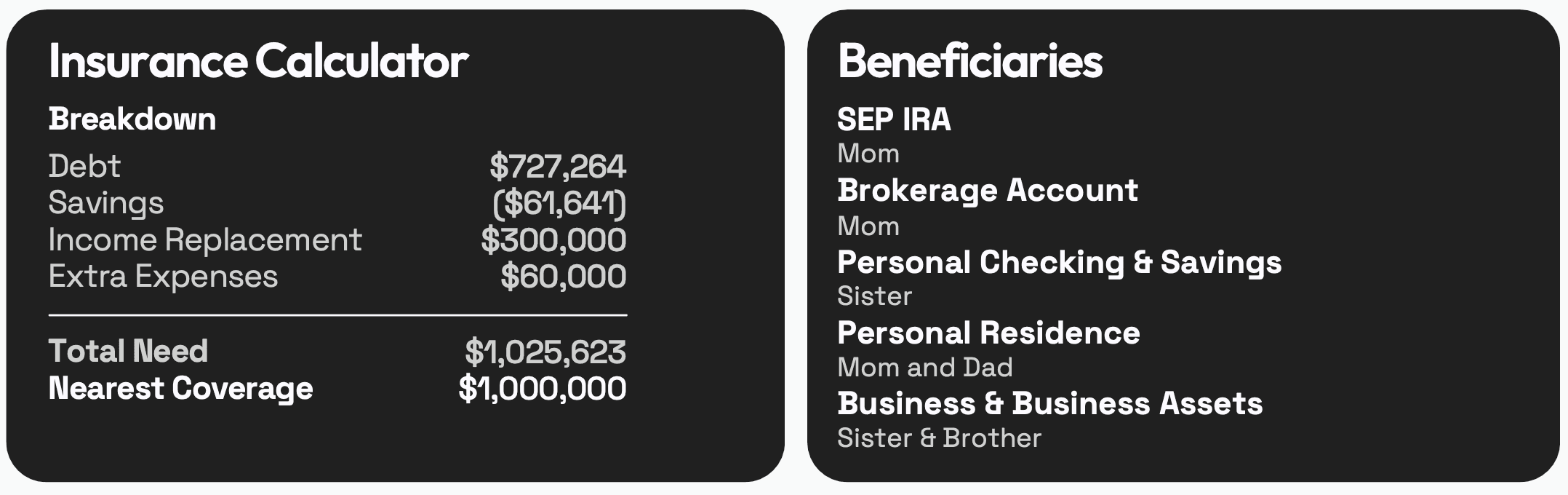
Log into every account that has a beneficiary designation, such as retirement accounts, life insurance, bank accounts, and confirm the names are current. Outdated beneficiaries have caused enormous problems for families. An ex-spouse, a deceased parent, or no one listed at all. It happens more than you'd think. Check it once a year.
Section 5: The Next 12 Months Action Plan
This is where everything you just learned turns into something you actually do.
After going through all four sections, you'll have a list of things that need to happen. Maybe you're underinsured. Maybe your emergency fund is short. Maybe your investment allocation has drifted and needs a rebalance. Maybe you've never set up a tax reserve account, and your quarterly estimates are a mess.
Write it all down here. Give each item a timeline. This is your financial to-do list for the year.
At the end of the page, add your current goals. The ones you're tracking, the new ones you're adding. The whole point is to check in on these every year and see if you're on track.
How Long Does This Actually Take?
The first time through: 1 to 2 hours. Especially if you've never tracked any of this before and you're hunting down account numbers and statements.
It should only take 45 minutes to one hour every year after that.
One to two hours once a year to have a complete picture of your financial life. For most people, that's a better return on time than anything else they'll do this year.
The Bottom Line
Financial planning got overcomplicated somewhere along the way. And for freelancers and content creators, people with variable income, multiple revenue streams, and no HR department handling any of this, that complexity is a real barrier.
This plan cuts through it.
Cheers,
Louis Guajardo


Found this useful? Pass it on.
About the author
Keep reading
Related articles
Roth Conversions Before Retirement: When They Can Save You Money (and When They Don't)
Many of the pre-retirees I meet in The Woodlands and across Greater Houston have done exactly what they were told to do....
Can You Retire With $1 Million? What a Fee-Only Financial Planner Would Analyze
The question almost always arrives the same way. Someone in their late fifties sits down across from me, slides over a 4...
Financial Planning After 50: The Decisions That Matter Most for Houston-Area Professionals and Business Owners
Once you turn 50, the financial planning conversation changes shape. You're no longer just accumulating — you're sequenc...